Showing posts with label Timeless books. Show all posts

Tuesday, 20 March 2012

Daisy Miller

Daisy Miller is an 1878 novella by Henry James.
Annie "Daisy" Miller and Frederick Winterbourne first meet in Switzerland, introduced by Randolph Miller, Daisy's 9-year old brother. Randolph considers their hometown of Schenectady, New York, to be absolutely superior to all of Europe. Daisy, however, is absolutely delighted with the continent, especially the high society which she wishes to enter.
Winterbourne is at first confused by her attitude, although greatly impressed by her beauty, but soon determines that she is nothing more than a young flirt. He continues his pursuit of Daisy in spite of the disapproval of his snobbish aunt Mrs. Costello.
Winterbourne informs Daisy that he must go to Geneva. Daisy asks him to visit her in Rome later that year.
In Rome, Winterbourne and Daisy meet unexpectedly in the parlor of Mrs. Walker, an American expatriate. Her moral values have become adapted to those of Italian society. Rumors about Daisy meeting with young Italian gentlemen make her socially exceptionable under these criteria. Winterbourne learns of Daisy's increasing intimacy with a young Italian of questionable society, Giovanelli, as well as the growing scandal caused by the pair's behavior. Daisy is undeterred by the open disapproval of the other Americans in Rome, and her mother seems quite unaware of the underlying tensions. Winterbourne and Mrs. Walker attempt to persuade Daisy to separate from Giovanelli, but she refuses any help that is offered.
One night, Winterbourne takes a walk through the Colosseum and, at its center, sees a young couple sitting there. He realizes that they are Giovanelli and Daisy. Winterbourne, infuriated with Giovanelli, asks him how he could dare to take Daisy to a place where she runs the risk of "Roman Fever" . Daisy says she does not care and Winterbourne leaves them. Daisy falls ill, and dies a few days later.



Wednesday, 18 January 2012

A Tale of Two Cities


“It was the best of times, it was the worst of times, it was the age of wisdom, it was the age of foolishness, it was the epoch of belief, it was the epoch of incredulity, it was the season of Light, it was the season of Darkness, it was the spring of hope, it was the winter of despair.”

by Charles Dickens

Saturday, 6 August 2011

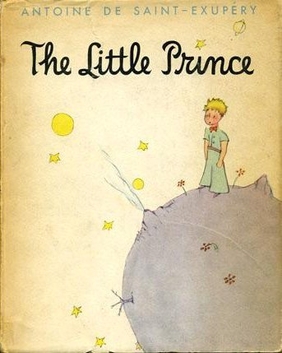
The Little Prince

The Little Prince (French: Le Petit Prince), published in 1943, is French aviator Antoine de Saint-Exupéry's most famous novella.

It has been translated into more than 190 languages and sold more than 80 million copies making it one of the best-selling books ever.

Though ostensibly a children's book, The Little Prince makes several profound and idealistic observations about life and human nature. For example, Saint-Exupéry tells of a fox meeting the young prince as he exits the Sahara desert. The story's essence is contained in the lines uttered by the fox to the little prince: On ne voit bien qu'avec le cœur. L'essentiel est invisible pour les yeux. ("One sees clearly only with the heart. What is essential is invisible to the eye.")

Other key thematic messages are articulated by the fox, such as: "You become responsible, forever, for what you have tamed" and "It is the time you have devoted to your rose that makes your rose so important."


Thursday, 14 July 2011

Thank you, Harry Potter & Co.


Thank you for giving me the trust to start reading novels in english and for
 all the magic you brought to us !!

A companion from the 9th grade to the 6th year of college.

Thursday, 7 July 2011

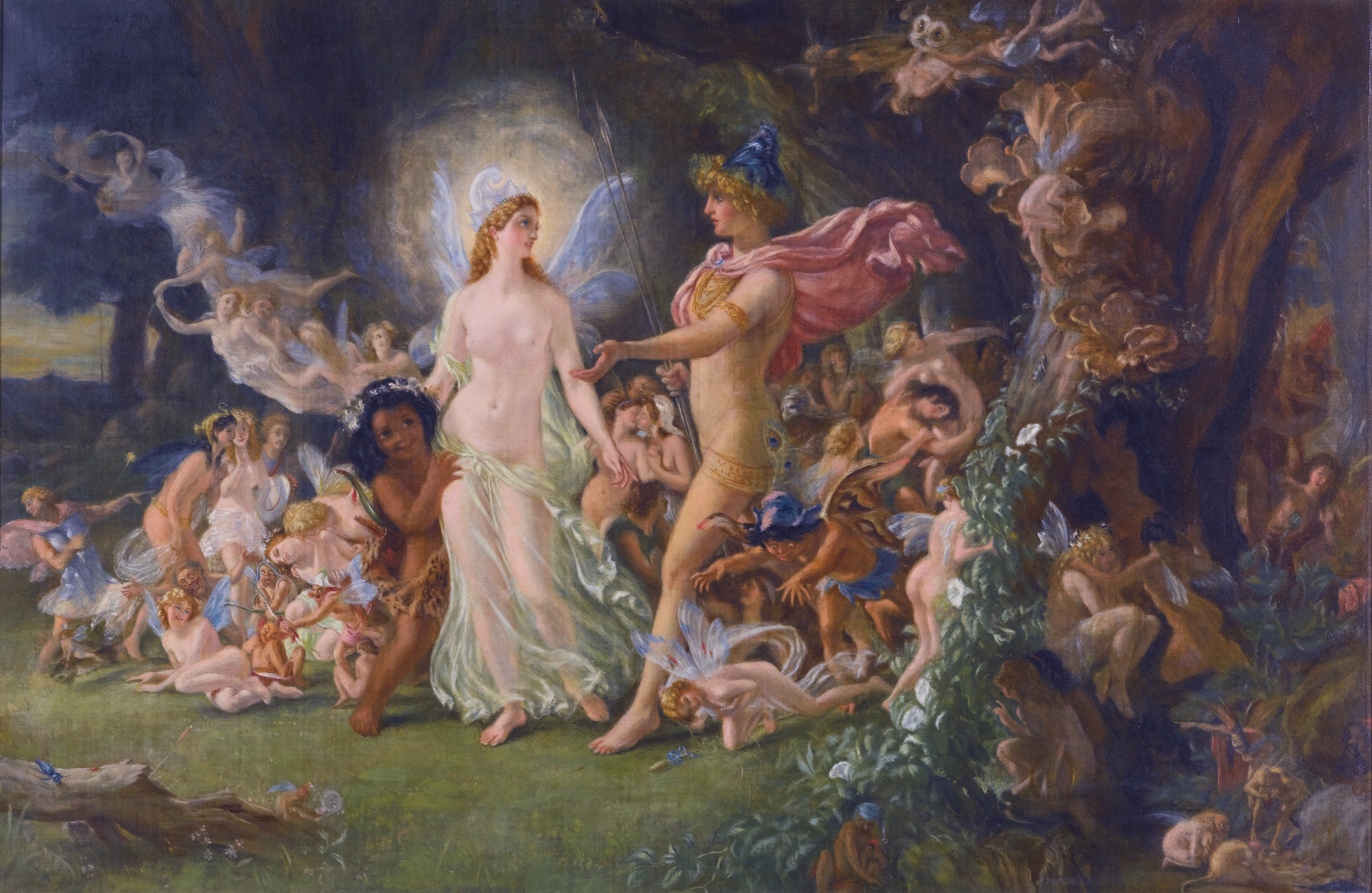
Oberon and Titania

 
I know a bank where the wild thyme blows,
Where oxlips and the nodding violet grows,
Quite over-canopied with luscious woodbine,
With sweet musk-roses and with eglantine:
There sleeps Titania sometime of the night,
Lull'd in these flowers with dances and delight;
And there the snake throws her enamell'd skin,
Weed wide enough to wrap a fairy in.

Oberon
A Midsummer Night's Dream
William Shakespeare


Thursday, 2 June 2011

The Little Mermaid

The Little Mermaid statue was a present from brewer Carl Jacobsen (The Carlsberg Breweries) to the city of Copenhagen, made by a then little known sculptor called Edvard Erichsen. The Little Mermaid was unveiled at Langelinje in 1913, as part of a general trend in Copenhagen in those days, selecting classical and historical figures to be used as decorations in the city's parks and public areas.

The Little Mermaid symbolizes the fairy tale by Danish author and poet Hans Christian Andersen, the story of a young mermaid who fell in love with a prince who lived on land, and often came up to the edge of the water to look for her love.

Sunday, 13 March 2011

Ivanhoe

"Exuberant, colourful and packed with incident, Ivanhoe is Sir Walter Scott's great romance of the Age of Chivalry."
in "Ivanhoe" by Penguin Popular classics

Rebecca and Brian de Bois-Guilbert by Leo Coguiet

Tuesday, 8 February 2011

Jules Verne

Jules Verne (February 8, 1828 – March 24, 1905) was a French author from Brittany who pioneered the science-fiction genre. He is best known for novels such as Twenty Thousand Leagues Under the Sea (1870), A Journey to the Center of the Earth (1864), and Around the World in Eighty Days (1873). Verne wrote about space, air, and underwater travel before air travel and practical submarines were invented, and before practical means of space travel had been devised. He is the third most translated individual author in the world. Some of his books have been made into films. Verne, along with Hugo Gernsback and H. G. Wells, is often popularly referred to as the "Father of Science Fiction".

in http://en.wikipedia.org/wiki/Jules_Verne

Wednesday, 12 January 2011

Heidi


A book for "children and those who love children", by Johanna Spyri

Saturday, 20 November 2010

The Wonderful Wizard of Oz

‘Can’t you give me brains?’ asked the Scarecrow.

‘You don’t need them. You are learning something every day. A baby has brains, but it doesn’t know much. Experience is the only thing that brings knowledge, and the longer you are on earth the more experience you are sure to get.’

(…)

‘But how about my courage?’ asked the Lion anxiously.

‘You have plenty of courage, I am sure,’ answered Oz. ‘ All you need is confidence in yourself. There is no living thing that is not afraid when it faces danger. True courage is in facing danger when you are afraid, and that kind of courage you have in plenty.’

(…)

‘How about my heart?’ asked the Tin Woodman.

‘Why, as for that,’ answered Oz, ‘I think you are wrong to want a heart. It makes the most people unhappy. If you only knew it, you are in luck not to have a heart.’

‘That must be a matter of opinion,’ said the Tin Woodman. ‘For my part, I will bear all the unhappiness without a murmur, if you will give me the heart.'


in The Wonderful Wizard of Oz by L. Frank Baum